Here's the link to our group text:
http://flaviusleahu.blogspot.co.at/2014/01/final-correction-european-year-of.html
Showing posts with label SuK3. Show all posts
Showing posts with label SuK3. Show all posts
Tuesday, January 21, 2014

Tuesday, January 14, 2014
Vocabulary Notebook
My approach to mastering the Porter vocabulary is a rather traditional one, meaning I rely a lot on paper an a pen. I usually go through the chapters and seek out the words of which I don't know the exact meaning or pronunciation, then I write them down in my notebook. My next step is to look them up in the online version of the Oxford Advanced American Dictionary. I really like this dictionary because its so clearly arranged. It shows you exactly what you need to know and there are recordings of every word. After reading through the page, I copy the information relevant for me into my notebook.
 Sorry for the bad quality, but my webcam won't do any better (at least I don't know how to get it to make a better picture). I hope you get the idea anyways.
I also use the vocab lists on vocabulary.com, but I prefer to work with that after studying my vocabulary notebook. On the backside of the notebook I write down words, collocation, or idiomatic expressions I encounter in books I read and which I haven't known before or particularly want to remember.

I also use the vocab lists on vocabulary.com, but I prefer to work with that after studying my vocabulary notebook. On the backside of the notebook I write down words, collocation, or idiomatic expressions I encounter in books I read and which I haven't known before or particularly want to remember.
Monday, January 13, 2014
My English Pronunciation Progress
Over the past few week I have tried to improve my English pronunciation in order to make it sound more "American". To accomplish that I've done some exercises and watched a few videos from our teachers' pronunciation practice page.
I tried a few of the Merriam-Webster's Perfect Pronunciation exercises, but I think that they are not that useful. Different words and sentences are pronounced by native speakers and you are supposed to repeat them correctly, but they don't give you any tips on how the sounds are produced.
I also had a look at the videos on manythings.com. Since one of the sounds I feel I still have to work on a little is the "r" sound, I watched the videos about words containing it. These videos didn't really help me at all, because they focus on words with the endings "-er" or "-re", which I don't have any problems with. I have difficulties pronouncing double "r"s correctly, like in "horror", and none of the videos were about this type of words.
I've practiced quite a bit over the last weeks and I think that I've made considerable progress on the "v" sound that I used to pronounce more like a "w". The only thing I still have to improve now is the "rr" in the middle of words, but I can't pronounce this sound properly in other languages as well, so maybe this is an innate problem. Nevertheless, I will try to solve also my last pronunciation issues.
I tried a few of the Merriam-Webster's Perfect Pronunciation exercises, but I think that they are not that useful. Different words and sentences are pronounced by native speakers and you are supposed to repeat them correctly, but they don't give you any tips on how the sounds are produced.
I also had a look at the videos on manythings.com. Since one of the sounds I feel I still have to work on a little is the "r" sound, I watched the videos about words containing it. These videos didn't really help me at all, because they focus on words with the endings "-er" or "-re", which I don't have any problems with. I have difficulties pronouncing double "r"s correctly, like in "horror", and none of the videos were about this type of words.
I've practiced quite a bit over the last weeks and I think that I've made considerable progress on the "v" sound that I used to pronounce more like a "w". The only thing I still have to improve now is the "rr" in the middle of words, but I can't pronounce this sound properly in other languages as well, so maybe this is an innate problem. Nevertheless, I will try to solve also my last pronunciation issues.
Teacher's Feedback on my Summary
Summary of "Europe already has one foot in the 'Japanese' deflation grave"
Ambrose
Evans-Pritchard, in The Telegraph of
October 23, 2013 analyses the risk of deflation for the Eurozone.
According to
the author, Europe is at risk of deflation which would cause the debt in the
affected countries to rise. This would be devastating for countries like Spain
or Italy that are already having serious debt issues. Their chances to
stabilize the national debt decrease sharply with every percentage point
inflation drops. Furthermore, austerity measures are widely unpopular in these
countries, making it even more unlikely that they will ever be able to achieve
a balanced budget.
Evens-Pritchard
thinks that a rising inflation rate would prevent deflation from happening, but
Germany wants inflation to stay low, because a low inflation rate helps their
economy in the short run. However, if deflation settles within the Eurozone, it
could soon spread to Germany as well. The author states that the Club Med allies,
including France and Italy, should unite in the European Central Bank’s
governing council and force Germany to accept a higher inflation rate of around
two percent. Instead of imposing counter-measures against deflation the
European policy leaders seem to hope for a decade of global growth to help them
solve their debt-crisis.
Here's the version that incorporates my teacher's feedback:
Summary of "Europe already has one foot in the 'Japanese' deflation grave"
Ambrose Evans-Pritchard, in The Telegraph of October 23, 2013 analyses the risk of deflation for the Eurozone.
According to the author, Europe is at risk of deflation which would cause the debt in the affected countries to rise. This would be devastating for countries like Spain or Italy that already have serious debt issues. Their chances to stabilize the national debt decrease sharply with every percentage point inflation drops. Furthermore, austerity measures are widely unpopular in these countries, making it even more unlikely that they will ever be able to achieve a balanced budget.
Evans-Pritchard thinks that a rising inflation rate would prevent deflation from happening, but Germany wants inflation to stay low, because a low inflation rate helps their economy in the short run. However, if deflation settles within the Eurozone, it could soon spread to Germany as well. The author states that the Club Med allies, including France and Italy, should unite in the European Central Bank’s governing council and force Germany to accept a higher inflation rate of around two percent. Instead of imposing counter-measures against deflation the European policy leaders seem to hope for a decade of global growth to help them solve their debt-crisis.
Group Essay: EU-Russia Relationship
Here's the link to the group essay I wrote together with Andrina and Stefanie:
http://andrina-suk.blogspot.co.at/2013/12/group-essay-eu-russia-relationship.html
http://andrina-suk.blogspot.co.at/2013/12/group-essay-eu-russia-relationship.html
Pecha Kucha Presentation: Maltese Language
Before the Christmas break, my partner Anita and I did a Pecha Kucha presentation on the Maltese language. I had never heard of Pecha Kucha before this semester, so the first thing we did was to find out how such a presentation is supposed to look like.
Here's how it works: you create a presentation consisting of 20 slides. On each slide there is a picture, but you don't write any text on it like you probably would in a classic Power-Point presentation. During the presentation, each slide will be displayed for exactly 20 seconds.
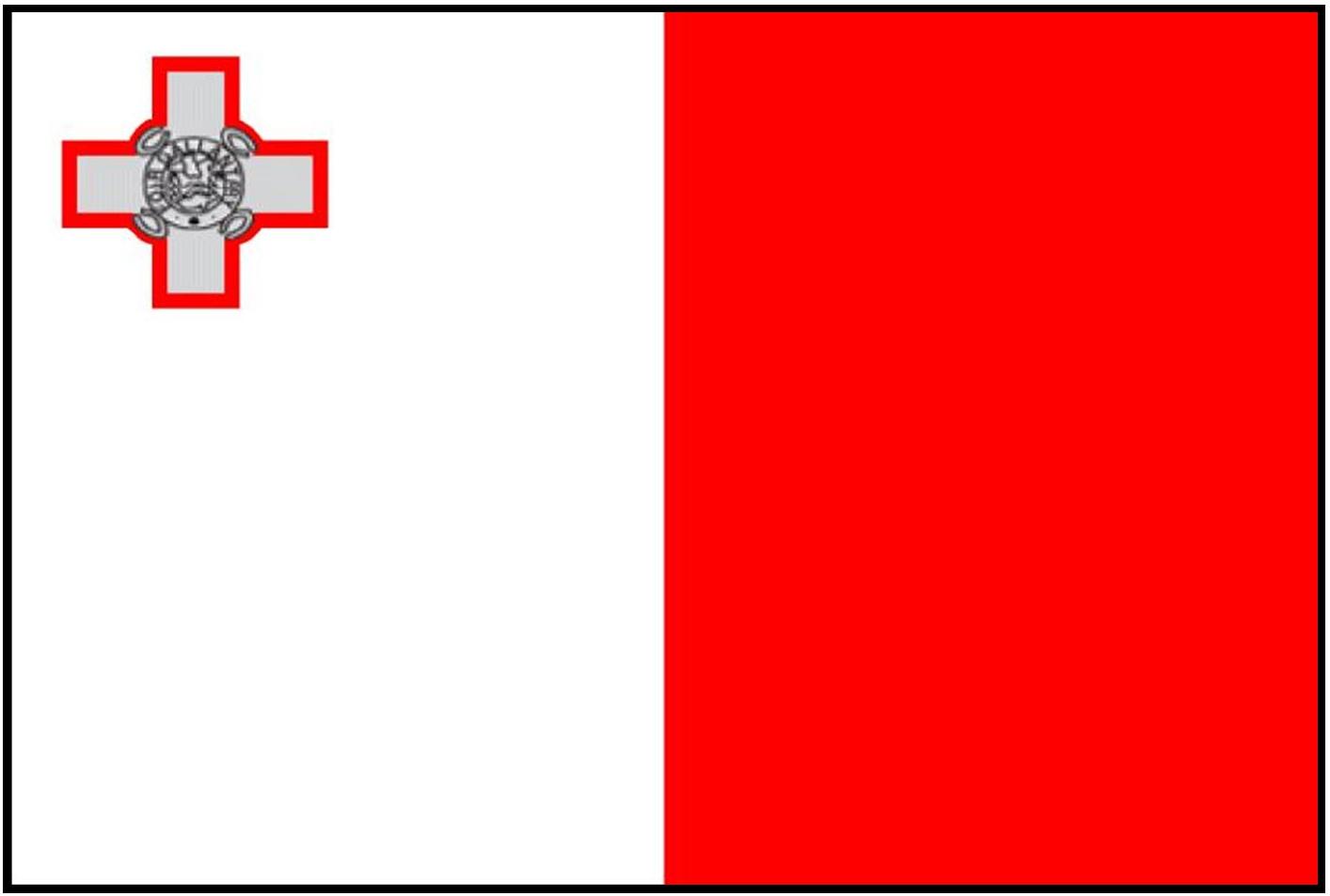
We started off by looking for the pictures for our presentation. When we were done with that we began writing our text. It turned out to be quite difficult to write 20 short texts that would be about 20 seconds long when read out. We had agreed that I would narrate the slides with even numbers and Anita would do the odd ones. As soon as we were done writing we sat down with a stop watch and read our texts out aloud to check if they had the appropriate length. Needless to say, we had to make a lot of changes since most texts were either too short or way too long.

While giving our presentation, our biggest problem was - once again - the very narrow time frame. A few times we had to leave things out towards the end, because otherwise we wouldn't have been able to finish in time with the slides. Despite the huge stress factor inherent to this type of presentation, I think we did a good job. Pecha Kucha was an interesting experience, but if I had the choice I probably wouldn't use this presentation technique again. I prefer the traditional style with less time pressure.
Here's the link to our presentation: https://docs.google.com/presentation/d/1rTkhdULyVZmnsERQcKOMLAwwLZYEHzJQ_EfVbSmbpFE/edit#slide=id.g17886b2dc_015
Here's how it works: you create a presentation consisting of 20 slides. On each slide there is a picture, but you don't write any text on it like you probably would in a classic Power-Point presentation. During the presentation, each slide will be displayed for exactly 20 seconds.
We started off by looking for the pictures for our presentation. When we were done with that we began writing our text. It turned out to be quite difficult to write 20 short texts that would be about 20 seconds long when read out. We had agreed that I would narrate the slides with even numbers and Anita would do the odd ones. As soon as we were done writing we sat down with a stop watch and read our texts out aloud to check if they had the appropriate length. Needless to say, we had to make a lot of changes since most texts were either too short or way too long.
While giving our presentation, our biggest problem was - once again - the very narrow time frame. A few times we had to leave things out towards the end, because otherwise we wouldn't have been able to finish in time with the slides. Despite the huge stress factor inherent to this type of presentation, I think we did a good job. Pecha Kucha was an interesting experience, but if I had the choice I probably wouldn't use this presentation technique again. I prefer the traditional style with less time pressure.
Here's the link to our presentation: https://docs.google.com/presentation/d/1rTkhdULyVZmnsERQcKOMLAwwLZYEHzJQ_EfVbSmbpFE/edit#slide=id.g17886b2dc_015
Wednesday, January 8, 2014
Progress on my Academic Paper
The topic of my paper is the relationship between the EU and Russia. The exact title is "How has the Diplomatic Relationship between the EU and Russia Developed Since 2008?" It has to be 1,500 words long and right now I'm about halfway through.
Luckily, I've already researched my sources before, so I could start writing immediately. Well, after a little reading, of course. At first, I pasted the introduction I had already written before into my new document and created a temporary bibliography. The first actual paragraphs I wrote were the ones on visa liberalization, because I had a good source for this chapter and because I have personal experience with Russian visas.
The only serious problem I have encountered yet is quotation. There's an ITAT guide on how to quote correctly, but it's actually more confusing than helpful. I quote some official websites of government agencies and private organizations and there's nothing in the guide on how to quote them, at least nothing that I have found.
Apart from my quotation-problem, my paper is progressing quite well. I'm optimistic that I won't have any trouble with meeting the deadline and I hope that my rather shady quotations won't cost me too many points.
Luckily, I've already researched my sources before, so I could start writing immediately. Well, after a little reading, of course. At first, I pasted the introduction I had already written before into my new document and created a temporary bibliography. The first actual paragraphs I wrote were the ones on visa liberalization, because I had a good source for this chapter and because I have personal experience with Russian visas.
The only serious problem I have encountered yet is quotation. There's an ITAT guide on how to quote correctly, but it's actually more confusing than helpful. I quote some official websites of government agencies and private organizations and there's nothing in the guide on how to quote them, at least nothing that I have found.
Apart from my quotation-problem, my paper is progressing quite well. I'm optimistic that I won't have any trouble with meeting the deadline and I hope that my rather shady quotations won't cost me too many points.
Wednesday, December 11, 2013
English Pronunciation
Learning the correct pronunciation is a vital part of learning a language. While I can say that I'm happy with my fluency in English there are a few pronunciation-related things I still have to work on.
When I was in the US last year, nobody actually doubted that I was an English native speaker, but they weren't so sure about where I might come from. Most people guessed either England or Canada.
In San Francisco my then-boyfriend and I went into a small shop and talked to a salesclerk. When asked where we came from, my boyfriend replied "Austria." The clerk then turned to me and said "You're not. But where are you from? England?"
A few days later an Australian, whom I met in LA, told me that I make the letter "v" sound more like a "w", which I know is something I really have to work on. I strive for an American accent, and my ultimate goal is that the next time I come to the US nobody will address me with "Canada, eh?"
In order to achieve my goal I have been taking closer looks at some English pronunciation websites. One of the videos there I found very helpful was about the difference in pronouncing "v" and "w", which helped me a great deal. I also looked at videos made by Rachel Smith, but I have to say that I didn't find her methods to be particularly helpful to me. I prefer Amy Walker's videos, because she shows you where the sound are made in your mouth and I think she explains that pretty well.
Pronunciation – V & W · engVid
Here's the link to the V&W video I mentioned above, it's from another pronunciation site I found pretty good. Enjoy!
When I was in the US last year, nobody actually doubted that I was an English native speaker, but they weren't so sure about where I might come from. Most people guessed either England or Canada.
In San Francisco my then-boyfriend and I went into a small shop and talked to a salesclerk. When asked where we came from, my boyfriend replied "Austria." The clerk then turned to me and said "You're not. But where are you from? England?"
A few days later an Australian, whom I met in LA, told me that I make the letter "v" sound more like a "w", which I know is something I really have to work on. I strive for an American accent, and my ultimate goal is that the next time I come to the US nobody will address me with "Canada, eh?"
In order to achieve my goal I have been taking closer looks at some English pronunciation websites. One of the videos there I found very helpful was about the difference in pronouncing "v" and "w", which helped me a great deal. I also looked at videos made by Rachel Smith, but I have to say that I didn't find her methods to be particularly helpful to me. I prefer Amy Walker's videos, because she shows you where the sound are made in your mouth and I think she explains that pretty well.
Pronunciation – V & W · engVid
Here's the link to the V&W video I mentioned above, it's from another pronunciation site I found pretty good. Enjoy!
Wednesday, November 20, 2013
Summary Critique
SUMMARY OF EUROPE ALREADY HAS ONE FOOT IN ‘JAPANESE‘ DEFLATION
Ambrose Evans-Pritchard, in the Telegraph of October 23, 2013, discusses the aspects of
the European Debt crisis while suggesting potential pertinent solutions. He dissects this
economic dilemma by providing a wide range of specific examples to expose its nature.
Evans-Pritchard proves that such a crisis is not preliminary by illustrating his article with
examples of events such as the American Revolution and the US agrarian revolt of the late
20th century, which according to author were induced by the economic policy errors. These
errors are being committed even nowadays.
Accordingly, the risks of deflation are highly underestimated, particularly in low debt
countries. While the inflation has been subsiding, there has been an upsurge of deflation. If
the latter exceeds 300%, severe consequences are to be expected. The Eurozone countries
are on the verge of experiencing the Japanese-style deflation.
Moreover, the symptoms are already there but attempts to eradicate the deflation problems
are not undertaken. Although, there are potential solutions such as forcing Germany to
accept inflation, the country is tentative to do so, due to its strong economy. Therefore,
apathy is chosen with a hope for a salvation by the next global growth.
Ambrose Evans-Pritchard, in the Telegraph of October 23, 2013, discusses the aspects of
the European Debt crisis while suggesting potential pertinent solutions. He dissects this
economic dilemma by providing a wide range of specific examples to expose its nature.
Evans-Pritchard proves that such a crisis is not preliminary by illustrating his article with
examples of events such as the American Revolution and the US agrarian revolt of the late
20th century, which according to author were induced by the economic policy errors. These
errors are being committed even nowadays.
Accordingly, the risks of deflation are highly underestimated, particularly in low debt
countries. While the inflation has been subsiding, there has been an upsurge of deflation. If
the latter exceeds 300%, severe consequences are to be expected. The Eurozone countries
are on the verge of experiencing the Japanese-style deflation.
Moreover, the symptoms are already there but attempts to eradicate the deflation problems
are not undertaken. Although, there are potential solutions such as forcing Germany to
accept inflation, the country is tentative to do so, due to its strong economy. Therefore,
apathy is chosen with a hope for a salvation by the next global growth.
My Critique:
I don't think that this summary is particularly good. It starts off very well, though.
While I really like the first two sentences, I think that the rest of the first paragraph is fluff. The American Revolution and the agrarian revolt are just briefly mentioned and are not important for the message of the text at all.
I also think that the author should have described the effects of deflation. They just go on and on about how bad deflation would be for Europe but don't explain why. "[...] severe consequences are to be expected", yeah but what consequences??
I don't believe that "moreover" is the right linking word to start the third paragraph. I wouldn't have used a linking word at all, but if the author wants to use on "furthermore" would be a better choice. I also wouldn't have written "with a hope for" but rather "in hope of".
Sunday, October 13, 2013
Freedom of Movement in the EU
Brainstorming
At first I wanted to write something about the history of the EU but then it occurred to me that this topic might be too general for such a short paragraph. Therefore I thought about how the EU affects my very own life and came up with the idea of writing about the Freedom of Movement.
Original Paragraph
In my opinion the Freedom of Movement is the most important benefit the EU has on its citizens. While you still had to pass border and customs controls just to take a trip to Germany not too long ago, you need not even bring a passport with you nowadays. This makes traveling a lot easier for all of us, but the Freedom of Movement also affects the daily lives of many people, because they are now able to work in any EU member country without having to care for visas or work permits. The same goes for students who can study in any member country they choose to. Moreover, the Freedom of Movement allows every EU citizen to live in the EU country they want to while keeping the rights they enjoyed in their countries of origin and therefore making us all equal, regardless of which nation we were born in. Of all aspects of the EU the Freedom of Movement is the one that directly affects the most people’s lives, and usually in a highly beneficial way.
Feedback 1 (Topic Sentence & Register)
I was advised to cross "in my opinion" out of my topic sentence.
The feedback on the register was positive, the only suggestion was that I might use "furthermore" instead of "moreover".
Feedback 2 (Vocab)
My correction partners recommended a small chance for my concluding sentence. I will take out the "the" in front of "most people's lives", because it is unnecessary there. Their second piece of advice was to write "benefits the EU has for its citizens" in the topic sentence.
Final Paragraph
The Freedom of Movement is the most important benefit the EU has for its citizens. While you still had to pass border and customs controls just to take a trip to Germany not too long ago, you need not even bring a passport with you nowadays. This makes traveling a lot easier for all of us, but the Freedom of Movement also affects the daily lives of many people, because they are now able to work in any EU member country without having to care for visas or work permits. The same goes for students who can study in any member country they choose to. Furthermore, the Freedom of Movement allows every EU citizen to live in the EU country they want to while keeping the rights they enjoyed in their countries of origin and therefore making us all equal, regardless of which nation we were born in. Of all aspects of the EU the Freedom of Movement is the one that directly affects most people’s lives, and usually in a highly beneficial way.
At first I wanted to write something about the history of the EU but then it occurred to me that this topic might be too general for such a short paragraph. Therefore I thought about how the EU affects my very own life and came up with the idea of writing about the Freedom of Movement.
Original Paragraph
In my opinion the Freedom of Movement is the most important benefit the EU has on its citizens. While you still had to pass border and customs controls just to take a trip to Germany not too long ago, you need not even bring a passport with you nowadays. This makes traveling a lot easier for all of us, but the Freedom of Movement also affects the daily lives of many people, because they are now able to work in any EU member country without having to care for visas or work permits. The same goes for students who can study in any member country they choose to. Moreover, the Freedom of Movement allows every EU citizen to live in the EU country they want to while keeping the rights they enjoyed in their countries of origin and therefore making us all equal, regardless of which nation we were born in. Of all aspects of the EU the Freedom of Movement is the one that directly affects the most people’s lives, and usually in a highly beneficial way.
Feedback 1 (Topic Sentence & Register)
I was advised to cross "in my opinion" out of my topic sentence.
The feedback on the register was positive, the only suggestion was that I might use "furthermore" instead of "moreover".
Feedback 2 (Vocab)
My correction partners recommended a small chance for my concluding sentence. I will take out the "the" in front of "most people's lives", because it is unnecessary there. Their second piece of advice was to write "benefits the EU has for its citizens" in the topic sentence.
Final Paragraph
The Freedom of Movement is the most important benefit the EU has for its citizens. While you still had to pass border and customs controls just to take a trip to Germany not too long ago, you need not even bring a passport with you nowadays. This makes traveling a lot easier for all of us, but the Freedom of Movement also affects the daily lives of many people, because they are now able to work in any EU member country without having to care for visas or work permits. The same goes for students who can study in any member country they choose to. Furthermore, the Freedom of Movement allows every EU citizen to live in the EU country they want to while keeping the rights they enjoyed in their countries of origin and therefore making us all equal, regardless of which nation we were born in. Of all aspects of the EU the Freedom of Movement is the one that directly affects most people’s lives, and usually in a highly beneficial way.
Friday, October 11, 2013
Five Ideas for the EU paper
This semester we are required to write a paper about an EU-relevant topic. Well, here are my five best ideas:
1. The EU's Reaction to the Recent Catastrophe off Lampedusa
I think this would be a good topic because it is about a very recent event and because it is specific enough for our word limit.
2. The State of the EU-Russia Relationship
My second language is Russian and I've also been to Russia twice, that's why I am personally very interested in this topic. A special focus could be put either on politics, economy, or visa regulations for both EU and Russian citizens.
3. The State of the EU-USA Relationship
I guess this topic is especially interesting now that the NSA espionage affair has been uncovered.
4. The European Union Prize for Literature
My favorite hobby (except for traveling) is reading and therefore I could imagine writing a paper about this topic. Plus, this topic is not too large, but just about right for our word limit.
5. The Selection Procedure for EU-Interpreters
Since most of us are studying to become interpreters and translators I think this topic is simply perfect for us. It is a specific topic that might also help us in our future careers!
1. The EU's Reaction to the Recent Catastrophe off Lampedusa
I think this would be a good topic because it is about a very recent event and because it is specific enough for our word limit.
2. The State of the EU-Russia Relationship
My second language is Russian and I've also been to Russia twice, that's why I am personally very interested in this topic. A special focus could be put either on politics, economy, or visa regulations for both EU and Russian citizens.
3. The State of the EU-USA Relationship
I guess this topic is especially interesting now that the NSA espionage affair has been uncovered.
4. The European Union Prize for Literature
My favorite hobby (except for traveling) is reading and therefore I could imagine writing a paper about this topic. Plus, this topic is not too large, but just about right for our word limit.
5. The Selection Procedure for EU-Interpreters
Since most of us are studying to become interpreters and translators I think this topic is simply perfect for us. It is a specific topic that might also help us in our future careers!
Subscribe to:
Posts (Atom)